Forestry
Forestry is one of the most accident-prone industries in Sweden, and every year several people die while working in the forest. Those who work manually with chainsaws are particularly at risk.
Risks in forestry
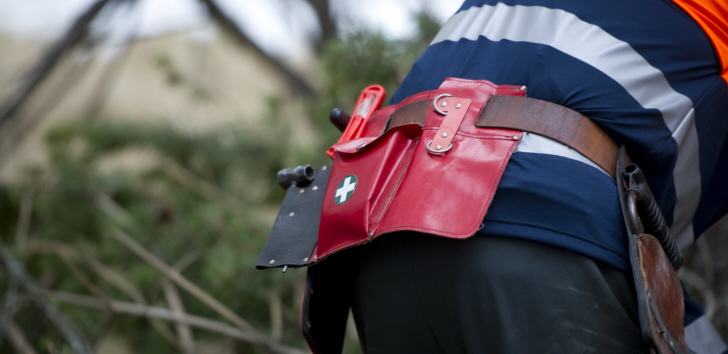
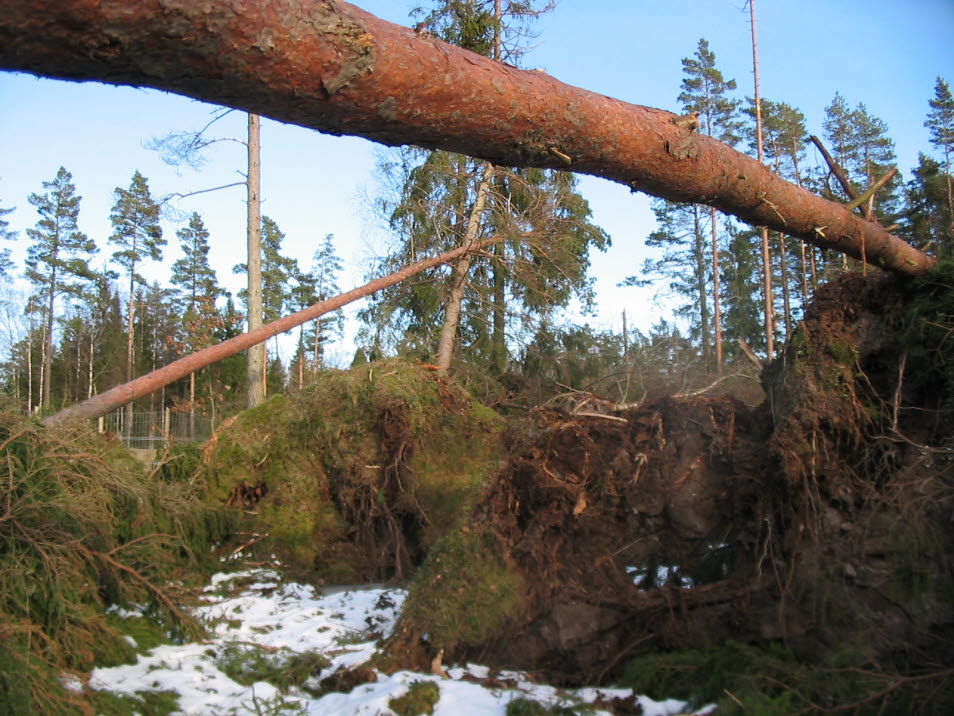
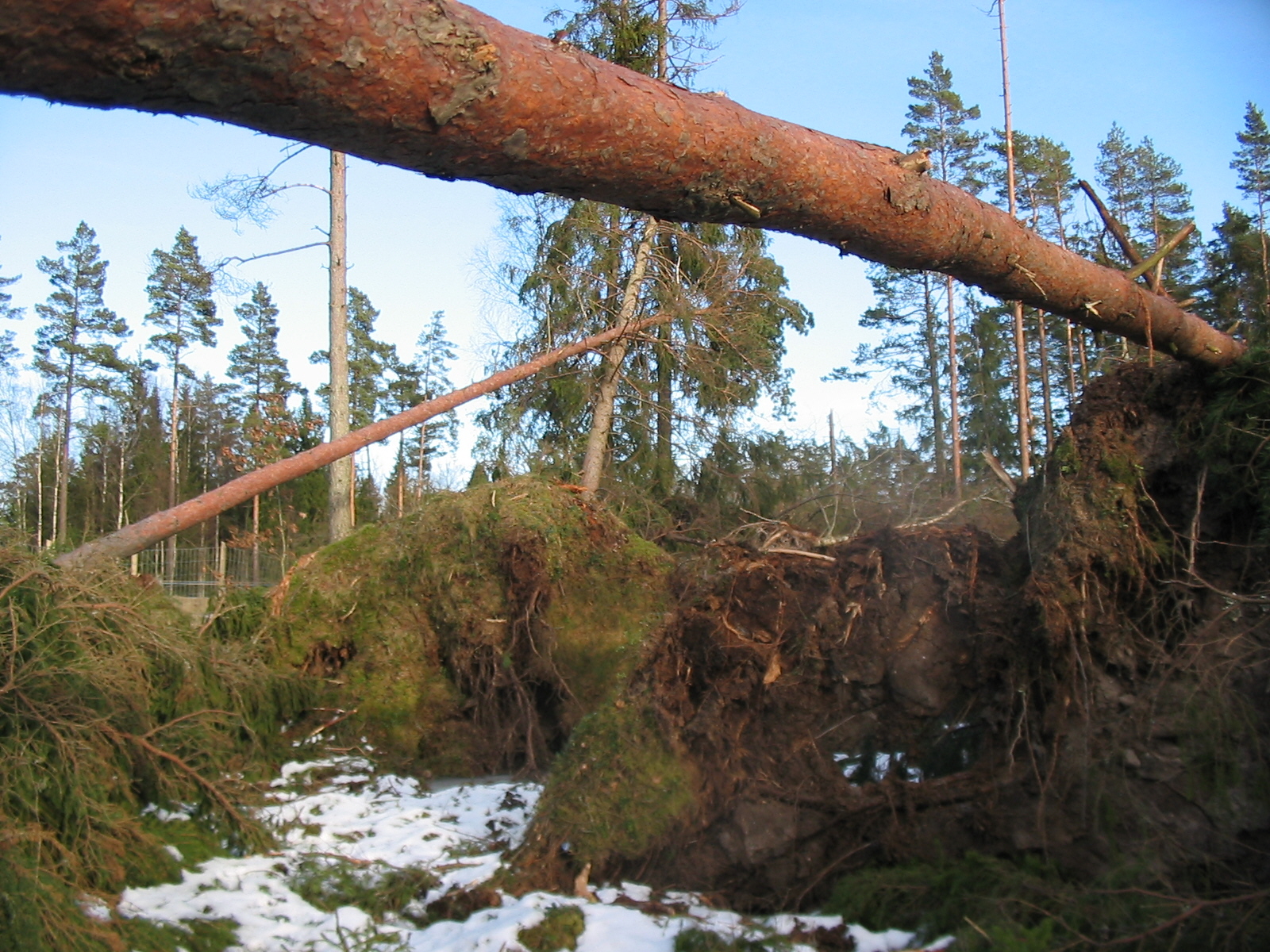
In forestry, there are several risky aspects of the work. Falls and chainsaw accidents in connection with tree felling are common Reclaiming storm-felled forest involves greater risks than normal logging.
Falls
One in four forestry accidents is due to a person falling on slippery ground, usually due to ice and snow If a person is clearing forest on a slope, the risk increases further. Falls also occur when people stand on the wheel of a forwarder, for example to remove a wheel lock.
Chainsaw accidents
Chainsaws are responsible for many of the accidents in forestry. The accidents are most often caused by a person being hit by the saw blade or by splintering trunks and branches while the person is sawing. For example, the saw blade may be thrown up to the face, or a log may break off and push the saw against the foot.
Reclaiming storm-felled forest
Working in storm-felled forest involves greater risks than normal logging.
In certain work situations, the risk of accidents can be significantly greater than in other forestry work. You should therefore be aware of the risks that arise during the following work:
- reclaiming storm-felled forest
- felling of steeply leaning trees
- felling of uprooted trees, trees leaning due to root system disturbance and trees hanging from standing trees
- root cutting of blown-down trees with large root balls
- cutting of trunks that are under heavy tension.
A tree that has been felled can be in tension due to its weight, similar to a drawn bow. When such a tree is cut, it is important not to be in the way when the great forces are released and the cut trunk snaps with great force.
Plan and organise the work to reduce risks
Review the specific requirements for each task before you start working. Everyone who will participate in the work should participate.
Review
- work planning, for example which parts of the site may be a tree that cannot be processed without machine help
- work techniques and risks in different situations
- local safety regulations
- how to organise in case of an accident.
During the process, the person performing the work should be in contact with their colleagues. With radio or telephone, they can have continuous two-way communication.
The employer is responsible for the risks involved in forestry
As an employer, you are responsible for reducing risk in forestry work, just as you are responsible for all aspects of the work environment. You must be familiar with the Work Environment Act and other work environment regulations.
If something happens
As an employer, you must ensure that everyone in the workplace knows how first aid and crisis support is organised at the workplace, i.e. the assistance measures that you must implement immediately if a person becomes injured or acutely ill.
First aid may involve
- keeping a person alive until the ambulance arrives
- immediately flushing the eyes if someone has been splashed with a corrosive substance
- ensuring that the injured or sick person receives care.
As an employer, you must ensure that there are the necessary preparedness and procedures for first aid and crisis support at the workplace, taking into account the nature, scope and specific risks of the activity.
Get a better work environment through working systematically
As an employer, you must manage the work environment systematically, so as to improve it. Our provisions for systematic work environment management apply to all employers – regardless of the activities or the risks that you and your employees could be exposed to.
Employees and safety representatives are important for a good work environment
Employees and safety representatives have an important role in work environment management. As an employer, you must give all employees the opportunity to participate in work environment management. For example, you can let employees suggest measures or provide feedback on measures you have implemented.
Employees' participation in work environment management
As an employee, you must participate in work environment management and participate in implementing the measures needed to achieve a good work environment. You must follow the employer's instructions. You must also report to your employer or your safety representative if the work involves immediate and serious danger to life or health.
Last updated 2025-12-15